Importance of Play
"Play is the medium through which young children learn about life in all its many aspects. They are continually investigating and exploring their ever-expanding world and trying to make sense of what they see, hear and feel. The School Curriculum and Assessment Authority (SCAA) recognises this fact and has placed great emphasis upon the need for practical and enjoyable activities in the Desirable outcomes for Children's Learning" (Leach, 1997. p.5).
Areas of play
- Personal, social and emotional development involves helping children to develop a positive sense of themselves, and others; to form positive relationships and develop respect for others; to develop social skills and learn how to manage their feelings; to understand appropriate behaviour in groups; and to have confidence in their own abilities.
- Physical development involves providing opportunities for young children to be active and interactive; and to develop their co-ordination, control, and movement. Children must also be helped to understand the importance of physical activity, and to make healthy choices in relation to food.
- Communication and language development involves giving children opportunities to experience a rich language environment; to develop their confidence and skills in expressing themselves; and to speak and listen in a range of situations.
Specific areas
- Literacy involves encouraging children to link sounds and letters and to begin to read and write. Children must be given access to a wide range of reading materials (books, poems, and other written materials) to ignite their interest.
- Mathematics involves providing children with opportunities to develop and improve their skills in counting, understanding and using numbers, calculating simple addition and subtraction problems; and to describe shapes, spaces, and measures.
- Understanding the world involves guiding children to make sense of their physical world and their community through opportunities to explore, observe and find out about people, places, technology and the environment.
- Expressive arts and design involves enabling children to explore and play with a wide range of media and materials, as well as providing opportunities and encouragement for sharing their thoughts, ideas and feelings through a variety of activities in art, music, movement, dance, role-play, and design and technology.
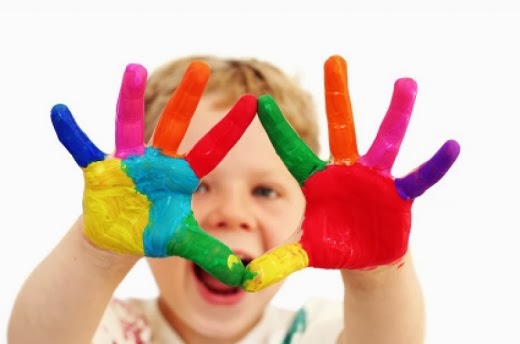 In my opinion I believe play is essential for a child's cognitive development in early years. Play allows the child to use his or her's imagination to explore different concepts. It allows children to develop in a number of areas (which are listed above). A child needs to be engaged to learn. A main factors for learning, is motivation, if a child is engaged in learning, and feels what they are doing has personal meaning then they will always want to learn. If a child isn't interested in what's being taught then its very difficult to stay engaged and stay motivated to achieve equilibrium. Heald (1997) suggests this does not mean leaving a child alone to play while the adults do something else, but means offering children a variety of experiences which enable them to find out for themselves the way things work.
Below is a video clip I found on YouTube. The clip shows learning through play from a child's perspective. It explains why play is important, and ask's the children what they think of play.
Reference List
B, Leach (1997) Learning Through Play: Small World Play.
C, Heald (1997) Learning Through Play: Construction Play, page 5.
Pre-school learning alliance (2013) Learning through play. Available internet:
www.pre-school.org.uk/parents/support-advice/420/learning-through-play
[Date Assessed Jan 13th].
 In order for a child to learn, they must want to learn and have the motivation to learn. It has been suggested that each of us have preferred learning styles. Some children learn better through kinaesthetic learning and others visually for example. Over the years, there have been many different contexts for learning and strong opinions on how a child will optimise their learning. During this educational blog I will research four unique contexts for learning, Learning through play, Outdoor learning, Montessori Education and Steiner Education. Using internet and book references I will outline the key areas of each, and attempt to explain what each has to offer for a child's cognitive development. After all the child must be stimulated when learning, if the child enjoys their learning experience then they will always want to learn and remain motivated to build upon their current knowledge and understanding, achieving the most from their education.

